
blog-thoughts on fiction writing and digital publishing
Thursday, 27 September 2012


Storytime: The Reluctant Blogger
Storytime: The Reluctant Blogger
Have I managed to link this blog to my Goodreads blog?
Have I managed to link this blog to my Goodreads blog?
Thursday, 23 August 2012
The Reluctant Blogger
We once spent a summer thinking up naff book titles. The Hawks of Galaxithi was one of them. Pollen on my Shoes, another. It became an obsession. Any trivial incident could trigger a title. Shampoo in My Nostrils. The Blocked Drain.
Today The Reluctant Blogger jumped into my head as subject heading for this post.
The path to this title, from the opening of my Inbox an hour ago until this moment, is tortuous. I received an email forwarded by Nicola Davies, who'd been my tutor on the Bath Spa MA creative writing course. She had put my name on a mailing organised by Goodreads to publicise a book. This struck me as something worth looking into - sorry, not the book itself but the means of publicising it. Half of me thinks this is something I should be doing. A couple of years ago I was doing it on behalf of others writers. Today I am my own project. Like a foxhound, I was on a trail which led me through Goodreads and Facebook and Google to the WritersReadersDirect website which I no longer own or manage. I arrived, panting, at this blogspot. I knew I hadn't entered a post for ages but - Reluctant Blogger indeed - only two posts so far this year.
The question is: why blog at all? As a writer, isn't it better to write for publication in book form, either in print or as an ebook? The answer comes: you need to blog to help sell the books you write.
I've looked at the Goodreads instructions for adding widgets to my website. A familiar feeling of doom has seeped into the depths of my soul. What is it about publicity that makes me behave like that PushmePullyou animal? I wonder if it is a congenital abnormality typical of writers. We need to go out to meet people and get ideas. We need to retire inwards to let the ideas simmer into stories to write. When out, we long to jump back in. When in, we long to jump back out.
Books need their producers to be out and about, shouting their wares. Nowadays only a very few authors get publishers willing to help with publicity. We need to do it for ourselves. Blogging, I believe, is one way. Linking a blog to Goodreads is good publicity. But even as I write this post, I shrink.
I'd love to hear from any writer who shares these feelings. Meanwhile, let's see if I can add a widget.
And, by the way, have a look at Take Care, Dear! at http://writersreadersdirect.com
Today The Reluctant Blogger jumped into my head as subject heading for this post.
The path to this title, from the opening of my Inbox an hour ago until this moment, is tortuous. I received an email forwarded by Nicola Davies, who'd been my tutor on the Bath Spa MA creative writing course. She had put my name on a mailing organised by Goodreads to publicise a book. This struck me as something worth looking into - sorry, not the book itself but the means of publicising it. Half of me thinks this is something I should be doing. A couple of years ago I was doing it on behalf of others writers. Today I am my own project. Like a foxhound, I was on a trail which led me through Goodreads and Facebook and Google to the WritersReadersDirect website which I no longer own or manage. I arrived, panting, at this blogspot. I knew I hadn't entered a post for ages but - Reluctant Blogger indeed - only two posts so far this year.
The question is: why blog at all? As a writer, isn't it better to write for publication in book form, either in print or as an ebook? The answer comes: you need to blog to help sell the books you write.
I've looked at the Goodreads instructions for adding widgets to my website. A familiar feeling of doom has seeped into the depths of my soul. What is it about publicity that makes me behave like that PushmePullyou animal? I wonder if it is a congenital abnormality typical of writers. We need to go out to meet people and get ideas. We need to retire inwards to let the ideas simmer into stories to write. When out, we long to jump back in. When in, we long to jump back out.
Books need their producers to be out and about, shouting their wares. Nowadays only a very few authors get publishers willing to help with publicity. We need to do it for ourselves. Blogging, I believe, is one way. Linking a blog to Goodreads is good publicity. But even as I write this post, I shrink.
I'd love to hear from any writer who shares these feelings. Meanwhile, let's see if I can add a widget.
And, by the way, have a look at Take Care, Dear! at http://writersreadersdirect.com
Saturday, 7 January 2012
Thursday, 5 January 2012
Against the odds?
My first novel, with the title Jam Today in UK, Louisa in US, was well received when it came out in 1969. I went on to write a number more, all published and well reviewed. When I returned to fiction writing in the last decade, I discovered how much had changed in publishing. I dreamt up the answer for midlist writers like me who fail to persuade publishers' marketing and sales departments to take us on. The answer, of course, is ebook publishing. I don't mean self-publishing. There needs to be quality control. So I originated an ebook publishing and selling business, WritersReadersDirect.
The challenge is to find readers for the sort of fiction I want to promote: thoughtful, well-written entertainments. Literary fiction, in other words.
Personally, I find reading on my Kindle a real pleasure. I like to read literary fiction. Yet all the people I know of my age, who also like to read thoughtful fiction, throw up their hands in horror at the thought of reading books on screen. There is a huge prejudice out there. I know this will change over time. I remember fellow writers insisting they could never write on a word processor. Now there can be few who use a pen or pencil or a typewriter. The same sea-change will eventually happen in those readers who abhor screens for reading and talk with rapture about the smell and feel of printed paper. Print has its benefits for some kinds of books; digital is best for others. Both have their uses.
Edbook editions are ideal for genre fiction - romance, thrillers, adventure stories, the sort of narratives which you want to read once, quickly, and perhaps on the move. This is the area which has seen phenomenal growth. Anyone can easily publish an ebook which means there's a vast ocean of self-published ebooks of varying merit. Also, the classics and other work that has already been proved successful in print are being given ebook editions by established print publishers. WritersReadersDirect fills the gap inbetween these sources of content. It provides a quality-controlled ebook home for midlist writers with new or previously published work and their potential readers.
Being more interested in creation than maintenance, I am now handing over WritersReadersDirect to Jonathan Stephenson of Magus Digital who will be able to develop the business with his resources and expertise. This means I'm now concentrating on my own writing. I'm making use of my capital, as it were. I'm bringing out my early novels as ebooks, initially on Kindle and soon on WRD.
Jam Today is on Kindle with a 5-day promotion from 7th - 11th January. Set in London's Swinging Sixties, it describes the antics of an off-beat heroine who plans her own comback against the men who value her for her body, not her brains. It sold film rights, and was announced as one of 8 new British films in the year the industry folded. Never mind ; it meant that we (artist husband Peter Barrett and myself) were able to continue living on Greek island, painting and writing.
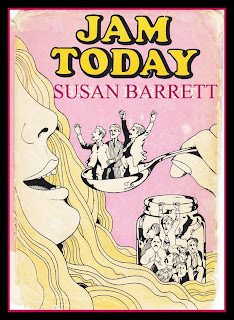 I find it hard to believe that anyone will hear of this new edition of Jam Today, let alone download it. It seems against all the odds, especially as I have no idea whether anyone even reads this blog. But I'm not retiring from the fray just yet.
The challenge is to find readers for the sort of fiction I want to promote: thoughtful, well-written entertainments. Literary fiction, in other words.
Personally, I find reading on my Kindle a real pleasure. I like to read literary fiction. Yet all the people I know of my age, who also like to read thoughtful fiction, throw up their hands in horror at the thought of reading books on screen. There is a huge prejudice out there. I know this will change over time. I remember fellow writers insisting they could never write on a word processor. Now there can be few who use a pen or pencil or a typewriter. The same sea-change will eventually happen in those readers who abhor screens for reading and talk with rapture about the smell and feel of printed paper. Print has its benefits for some kinds of books; digital is best for others. Both have their uses.
Edbook editions are ideal for genre fiction - romance, thrillers, adventure stories, the sort of narratives which you want to read once, quickly, and perhaps on the move. This is the area which has seen phenomenal growth. Anyone can easily publish an ebook which means there's a vast ocean of self-published ebooks of varying merit. Also, the classics and other work that has already been proved successful in print are being given ebook editions by established print publishers. WritersReadersDirect fills the gap inbetween these sources of content. It provides a quality-controlled ebook home for midlist writers with new or previously published work and their potential readers.
Being more interested in creation than maintenance, I am now handing over WritersReadersDirect to Jonathan Stephenson of Magus Digital who will be able to develop the business with his resources and expertise. This means I'm now concentrating on my own writing. I'm making use of my capital, as it were. I'm bringing out my early novels as ebooks, initially on Kindle and soon on WRD.
Jam Today is on Kindle with a 5-day promotion from 7th - 11th January. Set in London's Swinging Sixties, it describes the antics of an off-beat heroine who plans her own comback against the men who value her for her body, not her brains. It sold film rights, and was announced as one of 8 new British films in the year the industry folded. Never mind ; it meant that we (artist husband Peter Barrett and myself) were able to continue living on Greek island, painting and writing.

Monday, 19 December 2011
Writer as pavement artist?
It's no good, I tell new writers, to sit back and think your job is over once your work is published. You have to make it known. This was so, even in days gone by. I've recently realised I'm sitting on a harvest of readable fiction, published in the 60s, 70s, 80s. After scanning to produce Word docs from the hardback editions, then having the files given the OCR treatment, I have been painstakingly re-reading my first seven novels and checking for errors thrown up by the process. Like a pavement artist, I've spread out three here, hoping to attract passers-by. They have become social history, all circling around the issues of their time, served up as comedy with serious undercurrents.
These three are on Kindle and all have samples to download: Jam Today http://amazon.com/dp/B006GA47MA ;Noah's Ark http://amazon.com/dp B006FY5T38,; and Rubbish http://amazon.com/dp/B006JO1US2. Moses is about to join them.
It would be marvellous if you would like to review and possibly recommend them to others.
These three are on Kindle and all have samples to download: Jam Today http://amazon.com/dp/B006GA47MA ;Noah's Ark http://amazon.com/dp B006FY5T38,; and Rubbish http://amazon.com/dp/B006JO1US2. Moses is about to join them.
It would be marvellous if you would like to review and possibly recommend them to others.
Friday, 2 December 2011
When up to date becomes out of date
How long does it take for contemporary social satire to become social history?
Recently I have been embroiled in the fiddly task of turning my first seven novels into ebook editions. They were published originally in hardback and paperback in US and UK between 1969 and 1988. Conversion of work which was written on typewriters, pre-computers, involves scanning of the printed pages, then a process called OCR (Optimal Character Recognition). The result is a Word doc but one with a lot of less than optimal character recognition. Each line has to be checked for errors.
I dislike reading what I've written in the past. It can be squirm-inducing. But these early novels were written so long ago that they (almost) seem to be written by someone else. I'm actually fascinated by the way they have become period pieces. A London house cost £10,000. One heroine used a threepenny bit to hold up a stocking. Single parents were a rare species. The writer of those Swinging Sixties, Serious Seventies novels took a cool, slanted look at what was happening around her and served it up as entertainment. Many of the issues that puzzled her casts of characters have remained the same. As the French say, the more it changes, the more it stays the same. Only the context dates. When will cell phones become antiques?
By the way, WritersReadersDirect.com is back in business. Submissions welcome.
Recently I have been embroiled in the fiddly task of turning my first seven novels into ebook editions. They were published originally in hardback and paperback in US and UK between 1969 and 1988. Conversion of work which was written on typewriters, pre-computers, involves scanning of the printed pages, then a process called OCR (Optimal Character Recognition). The result is a Word doc but one with a lot of less than optimal character recognition. Each line has to be checked for errors.
I dislike reading what I've written in the past. It can be squirm-inducing. But these early novels were written so long ago that they (almost) seem to be written by someone else. I'm actually fascinated by the way they have become period pieces. A London house cost £10,000. One heroine used a threepenny bit to hold up a stocking. Single parents were a rare species. The writer of those Swinging Sixties, Serious Seventies novels took a cool, slanted look at what was happening around her and served it up as entertainment. Many of the issues that puzzled her casts of characters have remained the same. As the French say, the more it changes, the more it stays the same. Only the context dates. When will cell phones become antiques?
By the way, WritersReadersDirect.com is back in business. Submissions welcome.
Subscribe to:
Posts (Atom)